
Sargassum in Cancun: When It Hits, and Where It Doesn't

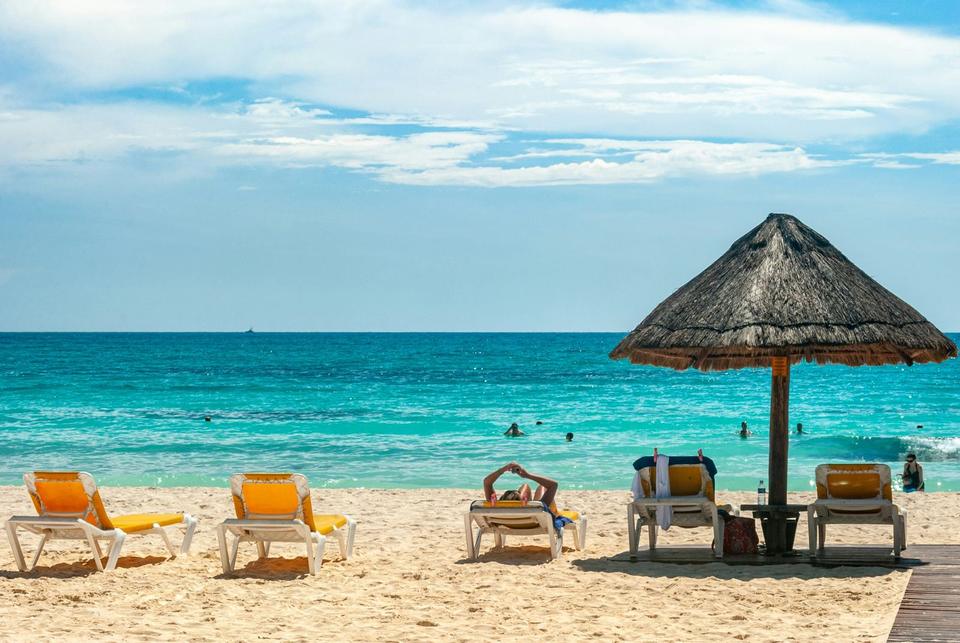
Every resort photo of Cancun looks like the picture at the top of this page. White sand, turquoise water, a palapa, nothing else. And on the right beach in the right month, that is exactly what you get.
The photo nobody publishes is the one where the same beach is under a foot of brown seaweed that smells like rotten eggs.
That seaweed is sargassum, and it is the thing resort websites will not answer honestly. So here is the honest version: when it comes, where it doesn't, and what to actually ask before you put down a deposit.
Where this comes from: I have travelled in Mexico, but I have not stayed at an all-inclusive there myself. What follows is drawn from booking these trips for clients, what those travellers report back, and current published data — which I have dated, because it moves.
What Sargassum Actually Is
Sargassum is a brown-gold floating seaweed that drifts across the Atlantic on ocean currents and washes up along the Mexican Caribbean. It is not pollution and it is not sewage, which is the first thing worth saying, because the smell makes people assume the worst.
In small amounts, floating offshore, it is harmless and you would barely notice it. The problem starts when it piles up on the sand and begins to decompose. Rotting sargassum releases hydrogen sulphide, which is the rotten-egg smell, it attracts flies, and it turns the shallow water a murky brown instead of that postcard turquoise.
Large blooms have been arriving since around 2011, and they have grown rather than faded. This is now a permanent feature of planning a Caribbean beach trip, not a freak event you can hope to dodge by luck.
When It Arrives, Month by Month
The season runs roughly April through October, and within that there is a clear shape:
- December to February — the most reliably clear stretch of the year. If the beach itself is the whole point of the trip, this is when to go.
- March and April — transitional. Usually still good, with the first arrivals possible toward the end.
- May to September — peak season for sargassum, with July and August typically the worst weeks of the year.
- October and November — tailing off, and November is usually back to clear.
One important caveat: this is a pattern, not a promise. 2026 saw unusually early arrivals as far back as January. Anyone who tells you a specific week is guaranteed clean is guessing, and I would rather give you the odds than sell you a certainty.
How Bad 2026 Has Been
2026 has been a heavy year, and it is worth knowing the real figures rather than the headlines.
The state government of Quintana Roo reported roughly 104,700 tonnes of sargassum collected as of 12 August 2026, against about 94,000 tonnes across the whole of 2025, with full-year projections in the region of 150,000 tonnes.
There is a nuance in that number that most coverage skips. The figure combines sargassum intercepted out at sea with sargassum cleared off the beaches. It is not 104,700 tonnes that landed on the sand. Part of what that number reflects is a far larger interception and cleanup operation than existed a few years ago, which is genuinely good news for anyone standing on the beach.
Those figures are current as of late August 2026 and they move constantly, so treat them as a sense of scale rather than a live reading.
Why One Beach Is Buried and the Next Is Spotless
This is the part that changes bookings, and almost nobody explains it.
Sargassum rides in from the east on prevailing currents. That means open coastline facing east and southeast catches the worst of it, while beaches that face north, or sit tucked behind a headland or an island, are sheltered from the same drift.
It is why two resorts twenty minutes apart can have completely different weeks. One is on an exposed stretch getting hammered; the other is around a corner with clean sand. Same day, same currents, same news reports.
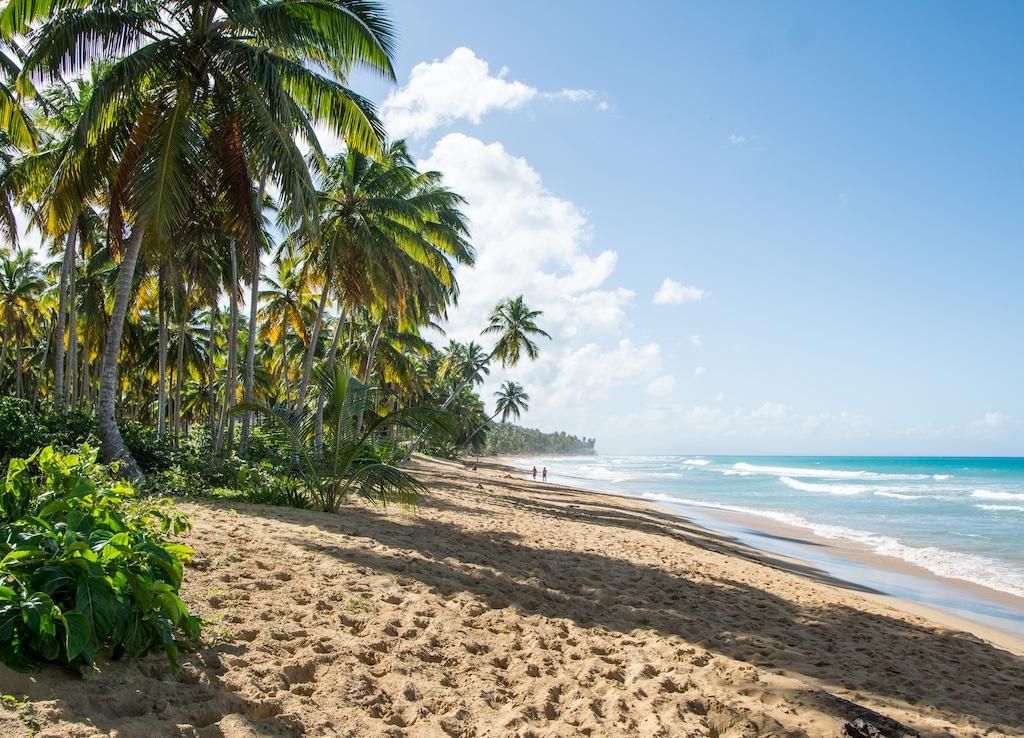
An open, east-facing stretch like this catches whatever the current brings. Which way the beach points matters more than the resort's star rating.
If you have not settled on a stretch of coast yet, that decision comes first — I compare them in where to stay in Cancun and the Riviera Maya, with drive times from the airport for each.
Booking sites do not tell you which way a beach faces. The photos are always shot from the sand looking out to sea, which tells you nothing about orientation. That single piece of information is one of the more useful things an advisor can check for you before you commit.
The Areas That Stay Clearest
Through the 2026 season, these held up best:
- Isla Mujeres, and Playa Norte in particular — north-facing and sheltered, and consistently the most reliably seaweed-free beach in the region.
- Isla Holbox — on the Gulf side entirely, so it sits outside the drift altogether.
- Costa Mujeres and Playa Mujeres — just north of Cancun, and largely clear through a heavy year. This is where a lot of the newer big all-inclusives have been built.
- The north-facing bays around Punta Cancun — the top end of the hotel zone, where the coast turns the corner.
- Cozumel's western, leeward side — sheltered by the island itself.
The Areas That Get Hit Hardest
Equally honestly, the places that took the most in 2026 were Tulum, Akumal, Playa del Carmen, and the long east-facing stretch of the Cancun hotel zone. Those beaches are the most exposed and they are the slowest to clear once they are covered.
That is not a reason to write them off. Tulum in January is glorious. It is a reason not to book Tulum in August and expect the brochure.
What to Ask Before You Book
If you take nothing else from this, take these questions. They separate the resorts that manage the problem from the ones hoping you will not notice.
- Which direction does your beach face? The single highest-value question on this list.
- Do you run offshore barriers, and do you have collection boats? Barriers stop it reaching the sand in the first place. Not every property invests in them.
- How many cleanup staff do you have, and what hours do they work? The answer you want is a crew that clears the sand early in the morning, before guests come down.
- Where are the pools relative to the beach? A resort with a serious pool complex survives a bad seaweed week. A resort whose entire draw is the sand does not.
- What is your change and cancellation policy? Worth knowing regardless, and specifically worth knowing here.
- Can you show me recent guest photos? Not marketing photos. Recent, dated, from guests.
If You're Already Booked and It Turns Up
First, it moves. Sargassum arrives and clears with the wind and the tide, and a bad morning genuinely can be a clean afternoon. It is rarely a write-off for a whole week.
Second, the water further out is usually fine even when the shoreline looks bad, so swimming off a pier or a boat is often perfectly pleasant.
Third, this is the moment to use the rest of the region. A day trip to Isla Mujeres or Cozumel puts you on clear water within the hour. Cenotes, the Tulum and Coba ruins, and the big eco-parks are inland or sheltered and completely unaffected.
One expectation to set: sargassum is a natural condition, not a service failure, so resorts are not obliged to compensate for it. Some will move you or offer something as a gesture. None of them have to.
How I Factor This Into a Booking
My approach is to match the month to how much the beach actually matters to you.
If the beach is the entire reason for the trip — a honeymoon, a milestone anniversary, a first trip to Mexico you have been saving for — I will push hard for December through April, and I will say so even if it is not the answer you were hoping for.
If your dates are fixed inside the summer, the fix is geographic rather than seasonal: north-facing beaches, Costa Mujeres, or one of the islands. And I will lean toward properties with barriers and a pool complex strong enough to carry a bad week.
If you are travelling solo this matters more than you would think, because a bad beach day at a resort where you do not know anyone is a longer day. It is one of the things I weigh when matching a solo client to a property, alongside the questions in my guide to solo travel at all-inclusive resorts and the pricing traps covered in resorts without a single supplement.
None of this is exotic knowledge. It is a set of questions that take time to ask, aimed at properties that would rather you did not ask them — which is a fair summary of what working with a travel advisor actually buys you.
Planning Mexico?
Let me match the month, the coast and the resort to the trip you're actually picturing.
Start Planning