Where to Stay in Cancun: Hotel Zone, Playa del Carmen or Tulum?

People tell me they want to go to Cancun. What they usually mean is that they want to fly into Cancun, which is a different thing entirely.
Cancun airport is the front door to about eighty miles of coastline, and the stretches along it are not variations on a theme. They are genuinely different vacations. Book the wrong one and nothing goes wrong exactly — the resort is fine, the beach is fine — you just spend the week quietly aware that this is not the trip you pictured.
So before anything else, here is the coast laid out by how long it takes to reach from the airport.
Where this comes from: I have travelled in Mexico, but I have not stayed at an all-inclusive on this coast myself. What follows is drawn from booking Mexico trips for clients, what those travellers report back, and current transfer and flight data — dated where it matters.
The Coast, From the Airport Out
- Isla Holbox ~2 hr + ferry Gulf side, not the Caribbean. Drive or ADO bus to Chiquila, then a 30-minute ferry. Sand streets, no cars.
- Isla Mujeres ~30 min + ferry Transfer to Puerto Juarez, then a 20-minute crossing that runs roughly every half hour.
- Costa Mujeres & Playa Mujeres 45–55 min North of Cancun. Newest big all-inclusives, quiet, nothing walkable nearby.
- Cancun Hotel Zone 20–30 min The classic strip. Shortest transfer of anywhere on the coast.
- Cancun Airport (CUN) — Everything above is north of here, everything below is south.
- Puerto Morelos ~30 min Small fishing town between Cancun and Playa. Quiet, and the closest thing to a local feel with a short transfer.
- Playa del Carmen 45–60 min Walkable town built around Fifth Avenue, with the rest of the coast on its doorstep.
- Akumal & the southern Riviera Maya ~1 hr 45 Spread-out resorts, cenotes, jungle. Quietest stretch of the mainland.
- Tulum ~2 hr Or fly into Tulum's own airport (TQO) and cut the transfer to minutes.
Those times are for private transfers in normal traffic. Shuttles that drop at several resorts take longer, sometimes much longer, and that is worth knowing before you save forty dollars booking one.
The reason I start here rather than with beaches is simple: transfer time is the one thing on this list you cannot change after booking, and it gets paid twice. Two hours each way at the end of a travel day, and again at 4am on the way home.
The Cancun Hotel Zone
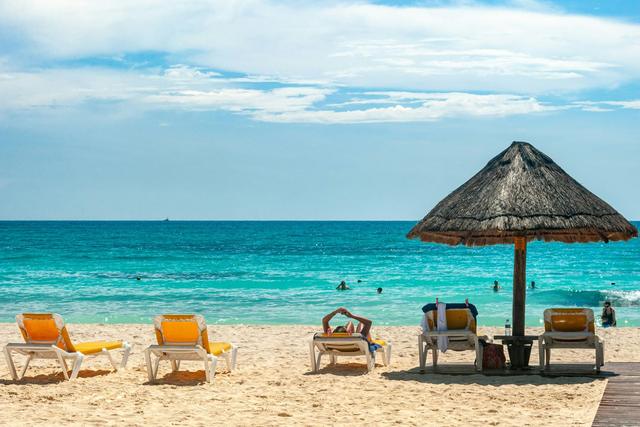
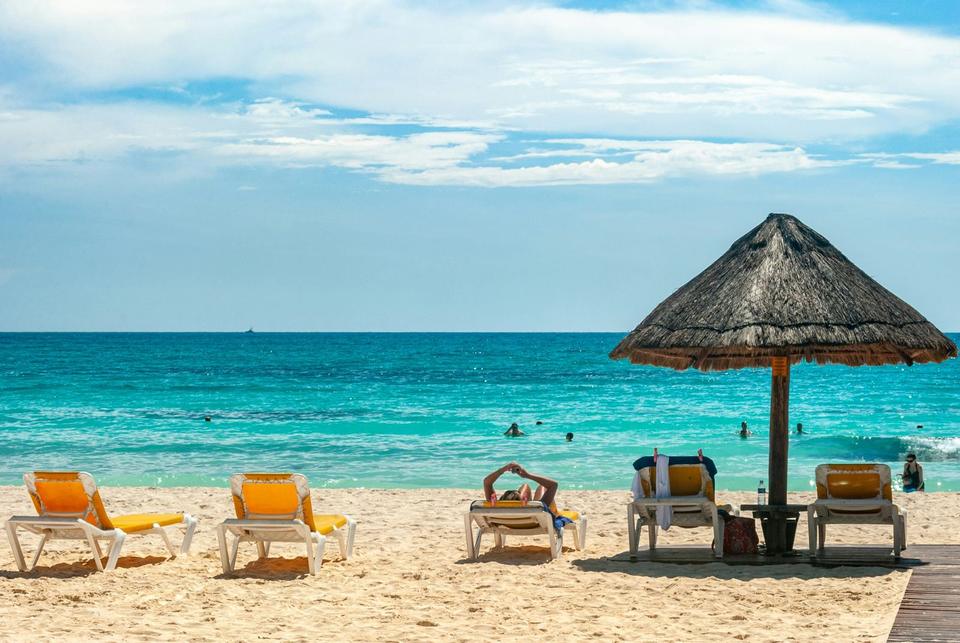
The classic strip. A narrow sandbar of large resorts, a short drive from the airport, with the most polished beaches on the coast and water that looks exactly like the pictures.
It suits people who want the fly-and-flop week with nothing to organise. Shortest transfer anywhere, enormous choice of resorts at every price point, and everything is right there.
The honest limitation is that the hotel zone is built for tourism and does not pretend otherwise. It is a strip of hotels, malls and clubs, and a common complaint is that it starts to feel small after about five days. For a long trip, or for anyone who wants a sense of Mexico beyond the resort gates, it is not the strongest pick.
One geographic detail matters here more than people realise: the hotel zone bends around a corner. The long eastern stretch faces the open sea, while the northern end faces the sheltered bay. That difference shows up in both the surf and the seaweed, which I go into in my guide to sargassum season in Cancun.
Costa Mujeres and Playa Mujeres
North of Cancun, and where most of the newest big all-inclusives have been built in the last few years. Wide, quiet beaches, modern resorts, and a north-facing orientation that leaves it noticeably less exposed to seaweed than the mainland stretches to the south.
It is a strong pick for anyone whose plan is genuinely to stay put — the properties are new, the beaches are good, and it is calm.
The trade-off is isolation. There is nothing walkable, so leaving the resort means booking a taxi or a tour every time. If that sounds restful, this is your area. If it sounds like being stuck, it is not.
Puerto Morelos
The stretch that gets overlooked most often. It is a small fishing town between Cancun and Playa del Carmen, about half an hour from the airport, with a genuine town square, a fishing pier and a reef directly offshore.
Puerto Morelos is the shortest route to feeling like you are somewhere rather than at a resort complex, without paying for it in transfer time. Resorts here run from quiet adults-only properties to large family all-inclusives.
It will feel too sleepy for anyone who wants nightlife. That is rather the point.
Playa del Carmen
If you want to be able to walk out of your hotel and find dinner, this is the answer.
Playa is a real town organised around Fifth Avenue, a long pedestrian street of restaurants, bars and shops. Beach access is easier here than in Cancun, where most of the sand sits behind the big hotels. And it is well placed for the rest of the coast — Xpu-Ha and Akumal are half an hour away, the cenotes and the Tulum ruins are an easy day out, and the Cozumel ferry leaves from the middle of town.
For a week or more, Playa usually gives you more to do than the hotel zone does. The trade is that it is busier and less polished, the beach is narrower in places, and Fifth Avenue is loud in the evenings. If you want quiet, book toward the north end of town rather than in the middle of it.
The Riviera Maya Proper
South of Playa, the coast opens out. Akumal, Puerto Aventuras and the long stretches between them are where the sprawling jungle-backed resorts sit, spaced far apart with nothing much in between.
This is the quietest part of the mainland and the most beautiful, and it is where you go if the plan involves cenotes, turtles at Akumal, and reading a book. It is also where transfer time starts to bite — an hour and three quarters each way — and where you are fully committed to your resort, because there is no walking anywhere.
It is the wrong choice for a short trip. On four nights you would spend most of the first and last days in a van.
Tulum, and the Airport Question
Tulum is two hours from Cancun airport, which used to settle the argument. It does not any more.
Tulum now has its own international airport, Felipe Carrillo Puerto (TQO), which handled about 1.24 million passengers in 2025 and, as of July 2026, had roughly ten airlines flying to around 28 destinations. From the US that includes nonstop service from Atlanta, Miami, Dallas and Houston, with seasonal service from Newark.
Two caveats before you get excited. Several airlines that launched Tulum routes between 2023 and 2025 have since cut frequencies or pulled out, so the schedule is thinner and less stable than Cancun's. And fares into TQO usually run higher.
A reasonable rule of thumb: if the Tulum fare is within about eighty dollars of the Cancun fare and you are staying in Tulum or south of it, TQO is worth it for the four hours of driving it saves. Outside that, fly into Cancun.
As for Tulum itself — the beach road hotels are small, design-led and expensive, and the town is a different, cheaper place a few kilometres inland. It is also the most exposed stretch of this coast for seaweed. Tulum in January is wonderful. Tulum in August is a gamble.
The Islands: Isla Mujeres and Holbox
Both involve a ferry, and both are worth the trouble for the right traveller.
Isla Mujeres is easy. Transfer about half an hour to Puerto Juarez, then a crossing of around twenty minutes with departures roughly every half hour. Playa Norte, the main beach, faces north and is the most reliably clear water in the whole region. The island is small, walkable and golf-cart-sized, which is either charming or limiting depending on your temperament.
Holbox is a bigger commitment: around two hours to Chiquila, either driving or on the ADO bus that runs from the airport, then a half-hour ferry across the lagoon. It sits on the Gulf side rather than the Caribbean, so it is a different sea altogether — shallow, calm, and outside the seaweed drift. Sand streets, no cars, and almost no large resorts. People either adore it or find it too basic, and there is not much middle ground.
How to Match the Area to Your Trip
Stripped down, it comes out roughly like this:
- Four nights or fewer — hotel zone or Puerto Morelos. Do not spend a quarter of a short trip in a van.
- First time, want it easy — hotel zone or Costa Mujeres.
- Want to walk out and find dinner — Playa del Carmen, north end.
- Want quiet without isolation — Puerto Morelos.
- Want to genuinely disappear — the southern Riviera Maya, or Holbox.
- Beach quality is the whole trip — Isla Mujeres or Costa Mujeres, and travel between December and April.
- Travelling alone — the larger resorts in the hotel zone or Costa Mujeres, where there is enough happening that you are not the only person at the bar. I go through what else to look for in solo travel at all-inclusive resorts, and how to avoid paying twice for the room in resorts with no single supplement.
The Mistake That Costs People Most
People pick the resort first and discover the location afterwards.
A deal comes up, the photos are lovely, the reviews are strong, and it is only once everything is paid for that anyone works out it is an hour and forty-five minutes from the airport with nothing within walking distance — on a five-night trip where the plan was to explore.
The resort was never the problem. It was a fine resort in the wrong place for that particular trip.
So decide the stretch of coast first, based on how long you are going, how much you want to leave the property, and what month you are travelling. Then look at resorts inside that stretch. It is a duller way to shop and it produces much better weeks, and it is most of what working with a travel advisor actually consists of.
Planning Mexico?
Let me match the coast, the month and the resort to the trip you're actually picturing.
Start Planning